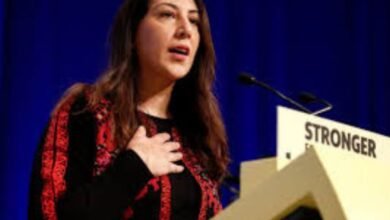
Gail Lythgoe: A Leading Voice in International Law, Academic Thought and Global Legal Governance


Introduction: Who Is Gail Lythgoe?
Gail Lythgoe is one of the most respected legal scholars in the field of international law and global governance. Her work as an academic, teacher and thought-leader helps shape how law is understood not just in the lecture theatre but around the world. She is known for being thoughtful, innovative and deeply engaged with both practical and theoretical aspects of law.
This article explores the life, work, influence and legacy of Gail Lythgoe. It dives into her education, her research interests, her teaching career, and how her voice is shaping important debates in law and society. Here, you will learn why Gail Lythgoe matters, what she teaches, and how she connects law to the wider world in clear and meaningful ways.
Early Life and Academic Beginnings
Growing Up with Curiosity
From her earliest days, Gail Lythgoe was someone who asked big questions. What makes law work across borders? How should nations interact in a fair and peaceful way? These questions, which many people overlook, became the foundation of her life’s work.
Strong Academic Foundations
Gail Lythgoe studied law at some of the United Kingdom’s most respected universities, gaining a solid foundation in legal thought, reasoning and interpretation. Her curiosity did not stop there. She went on to pursue advanced academic study, including a doctorate focused on how law intersects with geography and global governance.
This blend of legal training and academic rigour gave her a unique lens through which to explore international law — a lens that considers both practical legal rules and the deeper human, political and geographical elements that shape how law operates.
Career Path: From Scholar to Global Thinker
Early Teaching and Research Roles
After completing her advanced studies, Gail Lythgoe began teaching and conducting research at several universities. She quickly developed a reputation for clarity of thought, original perspectives and an ability to make complicated ideas accessible to students and colleagues.
Her early work focused on public international law — the body of law that governs relations between states. But she also pushed beyond traditional boundaries, exploring how law intersects with other realms like politics, culture and space.
University of Edinburgh: Leadership in Global Law
Today, Gail Lythgoe is a senior lecturer in Global Law at the University of Edinburgh. This role places her at the centre of one of the UK’s most vibrant academic communities for legal and political thought.
At Edinburgh, she teaches a range of courses that include international law, global governance, legal theory and the politics of global institutions. Her classes are known for being challenging but rewarding, helping students think critically about how law functions in the real world.
Key Research Interests and Contributions
Public International Law and Legal Theory
One of Gail Lythgoe’s core research areas is public international law. This field deals with the rules that govern relationships between countries, such as treaties, conflict resolution, human rights and global cooperation. Her work here is not simply descriptive, but deeply analytical, asking how and why these rules exist and what they mean for people around the world.
She questions old assumptions and explores how international law can respond to modern challenges — from climate change to human displacement, from global trade disputes to peacekeeping.
Legal Geography: Law and Space
A particularly innovative part of Gail Lythgoe’s work is what scholars call legal geography. This field looks at how law is connected to space and place. For example, what does it mean when law treats different parts of the world differently? How does geography — borders, territories, oceans — influence which laws apply and how?
By combining law and geography, she invites us to see law not just as words on a page, but as something that interacts with the physical and political worlds in powerful ways.
Global Governance and International Institutions
Another major area of Gail Lythgoe’s work is global governance — the systems and structures that guide how different countries interact and cooperate. This includes organisations like the United Nations, the World Trade Organisation and regional alliances.
Her research often examines how these institutions make decisions, who has power in those processes, and how legal frameworks can make global governance more fair, effective and accountable.
Teaching Philosophy and Student Engagement
Making Complex Ideas Understandable
What sets Gail Lythgoe apart as a teacher is not just her knowledge, but her ability to make difficult topics feel relevant. International law can feel abstract or distant, but she brings it to life by connecting legal rules to real human situations, from refugee rights to global environmental laws.
Her students often describe her classes as challenging but inspiring — the kind of learning that stays with you long after the lecture ends.
Encouraging Critical Thinking
Rather than presenting law as a set of fixed rules, Gail Lythgoe encourages students to question why things are the way they are. She wants them to think about who law serves, whose voices are heard and whose are ignored. This critical approach prepares students not just to pass exams, but to become thoughtful future leaders in law, policy and public life.
Editorial and Scholarly Service
Shaping Legal Conversation Beyond the Classroom
Gail Lythgoe’s influence extends beyond teaching. She plays an important role in academic publishing. She serves as an editor and reviewer for respected law journals, helping decide which research matters and shaping discussions that influence the field.
Her editorial work means she helps lift up other voices in international law, ensuring that important ideas get the attention they deserve.
Engaging in Scholarly Debates
In academic conferences and forums, she presents her research and engages with other thinkers from around the world. These debates help advance understanding of international law and global governance. In this way, her work both reflects and influences broader conversations among scholars and policymakers.
Public Engagement and Outreach
Explaining Law to Wider Audiences
While much of her work is academic, Gail Lythgoe also speaks to broader audiences. She brings her expertise into public forums where legal issues intersect with current affairs — for example, how international law responds to global crises or conflicts.
Her contributions help the wider public understand not just what the law says, but why it matters.
Balancing Academic Rigor with Clarity
One of her strengths is communicating complex ideas without losing rigour. She breaks down difficult concepts in ways that stay true to the discipline but are accessible to non-specialists. This skill is particularly valuable in a world where legal issues often impact everyday life. For example, her insights help people understand how treaties affect trade, how humanitarian law protects civilians, or how courts interpret human rights.
Personal Integrity and Professional Impact
A Life Devoted to Law and Humanity
Gail Lythgoe’s career reflects not just intellectual achievement, but a deeper commitment to understanding law’s role in shaping a fairer world. She appreciates that law is not just a set of rules but a framework that affects real lives — including the vulnerable, the displaced, the marginalised.
This human-centred approach gives her work moral weight. She studies law not only because it is intellectually fascinating, but because it matters to fairness, justice and human dignity.
A Role Model for Aspiring Legal Scholars
For students and young scholars, Gail Lythgoe represents what it means to combine academic excellence with real-world relevance. She shows that law can be both a rigorous intellectual pursuit and a force for positive change.
Challenges and Contemporary Relevance
Addressing Modern Global Problems
The world today faces enormous challenges — from global health emergencies to climate change, from economic inequality to mass migration. These issues often cross national borders, making international law more important than ever.
Gail Lythgoe’s work responds to these modern dilemmas. She asks not just how the law works, but how it can evolve to meet new realities. Her approach challenges complacency and points toward innovation in legal thinking.
Law in a Rapidly Changing World
As technology, politics and global relations shift rapidly, traditional legal frameworks are being tested. Gail Lythgoe’s scholarship helps us understand where law may be failing, and how it might be reimagined to protect rights, support cooperation and safeguard peace.
Legacy and Future Directions
A Lasting Influence on International Legal Thought
Gail Lythgoe is not just a teacher or researcher. She is a builder of ideas. Her contributions to legal theory, global governance and interdisciplinary study leave a lasting mark on the field.
Students, academics, policymakers and global thinkers all recognise her work as essential for navigating a complicated world.
Inspiring New Approaches to Law
Perhaps her greatest legacy will be the generation of scholars and practitioners who carry forward her ideas. Her influence extends through the people she has taught, the research she has supported, and the debates she has shaped.
Conclusion: Why Gail Lythgoe Matters
Gail Lythgoe’s career is a powerful example of how law can bridge thought and action. She shows that legal scholarship is not confined to books or courtrooms, but touches every aspect of global life.
From analysing how states interact, to guiding students, to shaping scholarly debate, her impact reaches far and wide. Her work helps us see law not just as rules, but as a living system that must adapt, respond and protect in an ever-changing world.
In the fields of international law and global governance, Gail Lythgoe stands as a respected and influential voice — one that continues to push us toward greater clarity, fairness and understanding in an increasingly connected world.