George Rodger: The Fearless British Photojournalist Who Captured Humanity and Horror
A Journey from War’s Darkness to Africa’s Light — The Inspiring Story of George Rodger

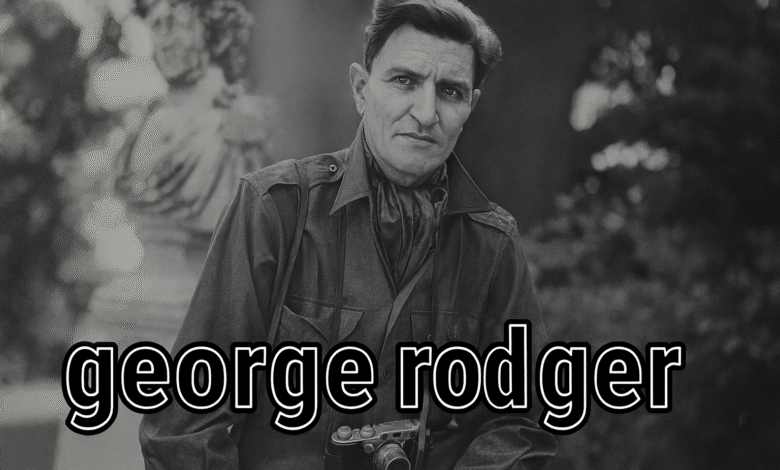
Table of Contents
ToggleIntroduction
George Rodger, the legendary British photojournalist, is celebrated as one of the most fearless and compassionate photographers of the twentieth century. His lens captured the extremes of human experience—from the devastation of war-torn Europe to the vibrant beauty of African tribal life. Rodger’s journey was not just about taking photographs; it was about discovering humanity amid chaos and preserving cultures untouched by modernity. As a founding member of Magnum Photos, his work continues to shape the ethics and vision of documentary photography worldwide.
George Rodger’s story reflects the paradoxes of his era: courage and despair, creation and destruction, war and peace. His transition from documenting the horrors of World War II to portraying the dignity of African tribes demonstrates his evolution as a man who sought meaning beyond violence. His life and career remain a masterclass in integrity, artistry, and emotional depth.
Quick Bio
| Full Name | George William Adam Rodger |
| Date of Birth | 19 March 1908 |
| Place of Birth | Hale, Cheshire, England |
| Date of Death | 24 July 1995 |
| Nationality | British |
| Profession | Photojournalist |
| Known For | Founding member of Magnum Photos, WWII photography, Nuba tribe documentation |
| Education | St Bees School, Cumberland |
| Spouses | Cicely Rodger, Lois “Jinx” Witherspoon Rodger |
| Children | Peter Rodger (filmmaker) |
| Legacy | Pioneer of ethical and humanistic photojournalism |
George Rodger’s Early Life and Education
Born in Hale, Cheshire, England, on March 19, 1908, George Rodger grew up with a restless curiosity and a love for adventure. He attended St Bees School in Cumberland, where he developed an interest in exploration and storytelling. Leaving school early, Rodger joined the British Merchant Navy, sailing around the world twice. These voyages became the foundation of his lifelong fascination with people, cultures, and landscapes.
During his travels, he began writing travel accounts and took up photography to illustrate them. The sea taught him discipline, while the world taught him empathy—qualities that would later define his work as a British photojournalist.
The Start of a Groundbreaking Career
In 1936, Rodger returned to England and began working as a photographer for The Listener, a magazine published by the BBC. His talent for composition and storytelling quickly set him apart. By 1938, he was freelancing for the Black Star Agency, contributing to publications like Tatler and Illustrated London News.
When World War II erupted, Rodger’s career took a dramatic turn. His photos of the London Blitz captured the resilience and suffering of ordinary people, establishing him as one of Britain’s leading photojournalists. His powerful imagery caught the attention of LIFE magazine, and soon, he became one of its war correspondents.
World War II and the Bergen-Belsen Revelation
As a war photographer for LIFE, George Rodger covered major campaigns across North Africa, Burma, Italy, and France. His images told stories of bravery and despair, giving the world a visual record of wartime humanity.
However, it was in April 1945, at the liberation of Bergen-Belsen concentration camp, that Rodger witnessed the full horror of war. His photographs of skeletal survivors and piles of corpses became iconic symbols of Nazi atrocities. Yet, the experience left him deeply shaken. He later admitted feeling guilt for composing “aesthetically pleasing” images amid unimaginable suffering. This moment marked a turning point, compelling him to abandon war photography altogether.
A New Vision: Capturing Life in Africa
Seeking meaning beyond destruction, Rodger turned his camera toward life rather than death. In 1947, he co-founded Magnum Photos with Robert Capa, Henri Cartier-Bresson, and David “Chim” Seymour—a collective that gave photographers creative freedom and control over their work.
He then embarked on a new journey across Africa and the Middle East, capturing the everyday beauty and traditions of tribal societies. His photographs of the Nuba and Latuka peoples in Sudan are among the most celebrated ethnographic images of the 20th century. Through these works, Rodger portrayed human dignity and cultural pride, steering away from colonial stereotypes and emphasizing shared humanity.
Magnum Photos and Its Global Impact
Magnum Photos was more than a business—it was a revolution. Founded on principles of independence and truth, the cooperative allowed photographers like Rodger to tell stories with authenticity. His vision helped shape Magnum’s identity as a platform for humanistic photojournalism, where integrity came before profit.
Rodger’s influence extended to younger generations of photographers, inspiring them to document life with compassion and honesty. His legacy within Magnum remains a cornerstone of its philosophy even today.
Personal Life and Family
George Rodger’s personal life was marked by both love and tragedy. His first wife, Cicely Rodger, traveled with him on early expeditions but died in childbirth in 1949. Three years later, he married Lois “Jinx” Witherspoon, an American assistant who shared his passion for photography. They had two children, including Peter Rodger, who went on to become a filmmaker.
Rodger settled in Smarden, Kent, where he continued to write and organize his photographic archives while remaining deeply connected to Magnum Photos.
Legacy of a British Photojournalist
George Rodger’s work represents the evolution of photojournalism from war reporting to cultural preservation. He redefined what it meant to be a British photojournalist, merging technical brilliance with moral sensitivity. His photographs of Bergen-Belsen are testaments to human cruelty, while his African portraits celebrate resilience, beauty, and tradition.
Through his lens, the world saw not just conflict but connection—an understanding that every face and every culture holds value. Rodger’s philosophy of “photographing with respect” continues to guide photographers and historians alike.
Conclusion
George Rodger’s life was a journey from the darkness of war to the light of humanity. He proved that photography is not just about images—it’s about empathy, truth, and legacy. As a British photojournalist, he stood at the intersection of history and humanity, leaving behind an archive that continues to educate and inspire.
His courage in documenting both horror and hope reminds us that even in the bleakest moments, there is beauty worth preserving. George Rodger will forever remain a symbol of integrity, compassion, and artistic excellence.
Frequently Asked Questions (FAQ)
1. Who was George Rodger?
George Rodger was a pioneering British photojournalist and a founding member of Magnum Photos. He is best known for his war photography during World War II and his later ethnographic work in Africa.
2. What was George Rodger famous for?
He is most famous for photographing the liberation of Bergen-Belsen concentration camp and for his powerful images of African tribes, especially the Nuba and Latuka people.
3. When and where was George Rodger born?
He was born on March 19, 1908, in Hale, Cheshire, England.
4. What is George Rodger’s legacy?
His legacy lies in his ethical approach to photojournalism, his role in founding Magnum Photos, and his transition from documenting war to celebrating human culture.
5. Why did George Rodger leave war photography?
After witnessing the horrors of Bergen-Belsen, he became emotionally disturbed by the act of photographing suffering and chose to focus instead on life and culture in peaceful regions.
6. What made George Rodger’s African photography special?
His African images stood out for their respect and authenticity. He portrayed the people he photographed as equals, emphasizing their dignity and traditions rather than exoticism.