Sir Malcolm Campbell: The Fearless British Journalist and Speed Pioneer Who Redefined Courage
A Life of Speed, Vision, and Unyielding Determination

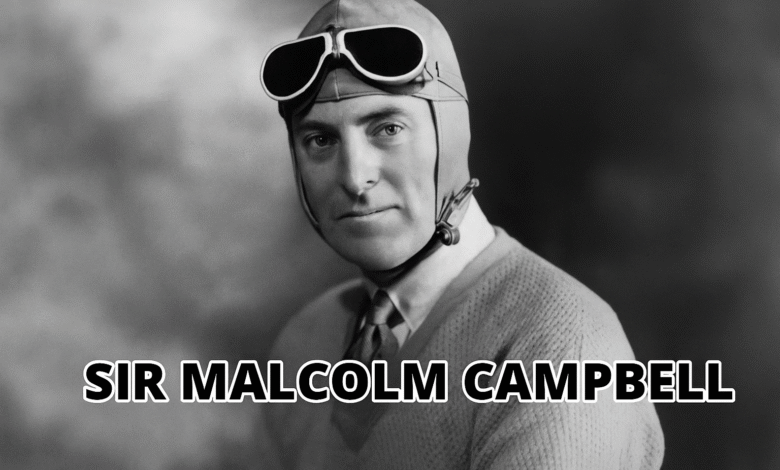
Table of Contents
ToggleIntroduction
Sir Malcolm Campbell was more than just a racing driver — he was a symbol of ambition, daring, and unbreakable human spirit. As a British journalist and record-breaking motorist, Campbell carved his name in history by becoming the first man to drive a car beyond 300 miles per hour. His pursuit of speed was not simply about records; it was about pushing human potential beyond its limits. Born in Kent, England, his legacy remains a defining chapter in both British engineering and global motor racing history.
He combined intelligence, precision, and a relentless drive to achieve the impossible. Known for his iconic “Bluebird” vehicles, Sir Malcolm Campbell inspired a generation of racers, engineers, and dreamers. His story is a blend of triumph, innovation, and boldness — a reflection of Britain’s golden age of exploration and invention.
Quick Bio
| Full Name | Sir Malcolm Campbell |
|---|---|
| Date of Birth | 11 March 1885 |
| Birthplace | Chislehurst, Kent, England |
| Date of Death | 31 December 1948 |
| Nationality | British |
| Education | Uppingham School, Rutland |
| Profession | Racing Motorist, British Journalist |
| Father | William Campbell |
| Spouses | Marjorie Dagmar Knott, Dorothy Evelyn Whittall, Betty Nicory |
| Children | Donald Campbell, Jean Campbell |
| Major Achievement | First person to exceed 300 mph on land |
| Notable Vehicle | “Bluebird” |
Early Life and Education
Born on 11 March 1885 in Chislehurst, Kent, Sir Malcolm Campbell grew up in a family of strong values and ambition. His father, William Campbell, worked as a diamond merchant, which exposed Malcolm to a disciplined lifestyle and an appreciation for precision. Educated at Uppingham School, he developed a fascination for machines and engineering — interests that later fueled his passion for speed and mechanics.
After his schooling, Campbell briefly entered the diamond trade before realizing his true passion lay elsewhere. His early exposure to motorcycles in the early 1900s led him to take part in endurance trials. Between 1906 and 1908, he won multiple motorcycle events, gaining a reputation for both skill and bravery. His early victories paved the way for a future that would change the face of motor racing.
From Two Wheels to Four: The Start of a Daring Career
In 1910, Malcolm Campbell shifted his focus to car racing, where he discovered the thrill and challenge of high-speed competition. At the famous Brooklands circuit, he began making his mark as a fierce competitor. His car, named “Bluebird” after the play L’Oiseau Bleu, became synonymous with his racing career. The name symbolized hope, freedom, and the pursuit of dreams — ideals Campbell lived by.
His early races at Brooklands earned him respect among racers and engineers alike. Despite facing numerous challenges and mechanical limitations of the time, his persistence stood out. Campbell’s combination of courage, innovation, and relentless curiosity made him one of the most admired figures in British motorsport. His reputation as both a daring racer and a British journalist gave him the platform to document and inspire others through his experiences.
World War I Service and Military Discipline
When World War I erupted, Malcolm Campbell answered the call of duty. He served as a motorcycle dispatch rider and later joined the Royal Flying Corps, where his skills with machines proved invaluable. This period strengthened his discipline, mechanical knowledge, and leadership — traits that would later help him achieve unparalleled speed records.
After the war, Campbell returned to racing with renewed vigor. His wartime experience not only refined his technical expertise but also gave him a new sense of focus and determination. He was no longer just a racer; he was a man on a mission to break boundaries and prove that limits existed only to be overcome.
Breaking Land-Speed Barriers
The 1920s marked the beginning of Campbell’s most extraordinary journey — his quest to conquer the land-speed record. In 1924, he set his first world record at Pendine Sands in Wales, reaching an astonishing 146.16 mph (235.22 km/h). It was a moment that changed his life and elevated him to international fame.
Over the next decade, he would break the land-speed record nine times, pushing both man and machine to their extremes. On 3 September 1935, at Bonneville Salt Flats, Utah, Sir Malcolm Campbell achieved what many believed impossible — he became the first person to exceed 300 mph (484.62 km/h). This incredible feat earned him a knighthood from King George V, cementing his status as one of Britain’s most celebrated heroes.
Conquering the Water: The Bluebird Legacy Continues
Not satisfied with dominating the land, Campbell turned his attention to water. He designed and piloted speedboats under the same legendary name — Bluebird. On 19 August 1939, he set a world water-speed record of 141.74 mph (228.11 km/h) on Coniston Water in England. His transition from land to water demonstrated his versatility and fearless nature.
The “Bluebird” name became more than a racing brand — it was a symbol of British ingenuity and resilience. Campbell’s dedication to testing the limits of technology made him a pioneer not only in motorsport but also in the development of high-speed vehicle design. His legacy continued through his son, Donald Campbell, who would later carry the Bluebird name to new heights.
Beyond Racing: The British Journalist and Visionary
Outside of racing, Sir Malcolm Campbell was also a respected British journalist and author. His writings captured the emotion, danger, and technical mastery of racing. Through his journalism, he educated readers about the science behind speed and inspired young enthusiasts to pursue engineering and innovation.
His role as a journalist reflected his intellectual side — the same curiosity that drove him to experiment with engines and aerodynamics. Campbell understood that sharing knowledge was as important as achieving records. His articulate storytelling made him one of the most recognizable public figures in Britain during his time.
Awards, Recognition, and Death
In 1931, Campbell was knighted by King George V for his contributions to British motorsport. His achievements represented not only personal victory but also national pride. Even after retiring from active racing, he remained a key influence in promoting safety and engineering excellence.
Sir Malcolm Campbell passed away on 31 December 1948 in Reigate, Surrey, at the age of 63. Though his life ended, his spirit lived on through his records, his writings, and his family’s continued involvement in racing. His son, Donald Campbell, carried forward the Bluebird legacy, ensuring that the name “Campbell” remained synonymous with speed and determination.
Conclusion
Sir Malcolm Campbell’s life was a remarkable blend of intellect, courage, and innovation. As a record-breaking motorist and an accomplished British journalist, he transformed the way the world viewed speed and technology. His relentless pursuit of excellence redefined what humanity could achieve with vision and perseverance.
He was both a hero and a human — ambitious, daring, and unafraid of failure. His legacy stands as a testament to the power of passion and persistence. Today, Campbell’s name continues to inspire engineers, racers, and dreamers who look to the horizon and see no limits.
Frequently Asked Questions (FAQ)
Q1. Who was Sir Malcolm Campbell?
Sir Malcolm Campbell was a British racing driver and journalist who broke multiple land and water speed records, becoming the first man to drive over 300 mph.
Q2. What is Sir Malcolm Campbell best known for?
He is best known for setting nine land-speed records and reaching over 300 mph in 1935 with his “Bluebird” car.
Q3. When was Sir Malcolm Campbell knighted?
He was knighted in 1931 by King George V for his achievements in motor racing.
Q4. Did Sir Malcolm Campbell have children?
Yes, he had two children — Donald Campbell, who also became a record-breaker, and Jean Campbell.
Q5. What is the significance of the name “Bluebird”?
“Bluebird” was the name given to all of Campbell’s record-breaking cars and boats, symbolizing hope, freedom, and aspiration.
Q6. Where did Sir Malcolm Campbell set his final land-speed record?
He set his final record at Bonneville Salt Flats, Utah, achieving a speed of 301.13 mph in 1935.
Q7. How did Sir Malcolm Campbell die?
He died on 31 December 1948 in Reigate, Surrey, England, aged 63.