Andrew Gilligan: From Controversial Journalist to Influential Policy Adviser
The story of a former journalist who reshaped British media and government policy through conviction, controversy, and change.

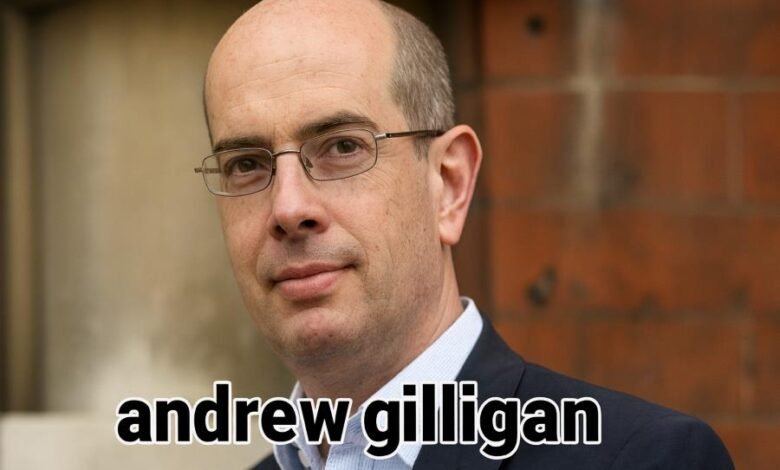
Table of Contents
ToggleIntroduction
Andrew Gilligan is a prominent British journalist and public policy adviser whose career has traversed the turbulent worlds of media, politics, and public service. Known for his investigative courage as well as the controversies surrounding his work, Gilligan’s journey from a BBC correspondent to a key government adviser highlights both the power and perils of truth-telling in modern journalism. His influence in shaping transport and infrastructure policy in the United Kingdom underscores his transformation from a news reporter to a national decision-maker.
Born in London in 1968, Andrew Gilligan rose to prominence in the early 2000s for his fearless reporting. Despite facing major professional challenges, including one of Britain’s most discussed media controversies, he rebuilt his reputation through diligent policy work. His career stands as a testament to resilience, intellect, and reinvention.
Quick Bio
| Field | Details |
|---|---|
| Full Name | Andrew Paul Gilligan |
| Date of Birth | 22 November 1968 |
| Age (2025) | 56 years |
| Birthplace | Teddington, London, United Kingdom |
| Nationality | British |
| Education | Grey Court School, Kingston College of Further Education, St John’s College (Cambridge University) |
| Profession | Former journalist, Government Policy Adviser |
| Known For | BBC Iraq dossier report, Cycling Commissioner for London, Adviser to UK Prime Ministers |
| Awards | Journalist of the Year (2008) |
| Current Role (2025) | Head of Transport, Infrastructure & London at Policy Exchange |
Early Life and Education
Andrew Gilligan was born in Teddington, southwest London, into a politically aware household. His father, Kevin Gilligan, served as a Labour councillor, inspiring his early interest in public affairs. Growing up in a family that valued civic engagement, Andrew developed a deep curiosity for current events and public service.
He attended Grey Court School in Richmond and later pursued further education at Kingston College of Further Education. His intellectual potential led him to St John’s College, University of Cambridge, where he studied History. During his time at Cambridge, Gilligan became news editor of the student newspaper Varsity, and his participation in the Cambridge Universities Labour Club revealed an early fascination with politics and policy.
The Beginning of a Journalism Journey
After graduating from Cambridge, Gilligan began his career in journalism with the Cambridge Evening News, where his sharp analytical skills and fearless reporting quickly gained attention. His commitment to accuracy and critical thinking caught the eye of senior editors, earning him a place at The Sunday Telegraph, where he later became a defence correspondent.
By 1999, he had joined BBC Radio 4’s Today Programme as a Defence and Diplomatic Correspondent. His reporting was bold, his style direct, and his investigations fearless. These qualities would soon bring him national recognition—and immense scrutiny.
The 2003 Iraq Dossier Controversy
In May 2003, Andrew Gilligan reported that the British government had “sexed up” its intelligence dossier on Iraq’s weapons of mass destruction, suggesting that officials exaggerated evidence to justify war. The report, broadcast on BBC Radio 4, created political shockwaves across the nation.
This revelation became one of the most significant political and media storms in modern British history. The ensuing Hutton Inquiry investigated the death of Dr. David Kelly, Gilligan’s source, and examined the BBC’s reporting standards. Though the inquiry’s conclusions led to his resignation in 2004, Gilligan maintained that his report was motivated by truth and journalistic integrity. The incident remains a defining moment in British journalism, illustrating both the power and risk of investigative reporting.
Rebuilding Through Persistence
After leaving the BBC, Gilligan redirected his energy toward print journalism. He joined The Spectator, then edited by Boris Johnson, and later moved to the London Evening Standard. His investigative stories on London politics and urban corruption won widespread recognition.
In 2008, he was awarded Journalist of the Year for his work exposing misconduct in London’s political landscape. This accolade marked a powerful comeback and reaffirmed his place among Britain’s leading investigative reporters. His articles were known for their depth, clarity, and unflinching tone—qualities that defined him as both a meticulous journalist and a courageous critic of power.
Transition to Public Policy
In 2013, Andrew Gilligan entered public service as Cycling Commissioner for London, appointed by then-Mayor Boris Johnson. His task was to improve London’s cycling infrastructure and promote sustainable transport. Under his guidance, the city saw the expansion of segregated cycling routes and safer commuting systems.
His strategic insights into urban mobility soon positioned him as a respected policy thinker. In 2019, he joined the Downing Street Policy Unit as a Transport Adviser under Prime Minister Boris Johnson, later continuing in a similar role under Prime Minister Rishi Sunak. By 2020, he had been appointed as a special representative on the Transport for London (TfL) board, where he contributed to national-level transport strategies.
In 2024, Gilligan became Head of Transport, Infrastructure and London at the Policy Exchange think tank, focusing on sustainable infrastructure and urban development.
Influence and Impact
Andrew Gilligan’s impact extends far beyond journalism. His dual experience as a media insider and government adviser allows him to interpret public issues with rare perspective. He has influenced London’s transport evolution, urban cycling reforms, and national infrastructure strategies.
Despite early controversies, his legacy now represents transformation—proof that professional setbacks can be springboards for public service. His journey from a former journalist to a policy architect illustrates how courage, intellect, and adaptability can redefine a career.
Achievements and Recognition
-
Journalist of the Year (2008) – for investigative reporting on London mayoral politics.
-
Pioneered cycling superhighways and safer urban commuting systems as London’s Cycling Commissioner.
-
Served as a strategic adviser to two British Prime Ministers.
-
Continues to influence national debates on transport, sustainability, and infrastructure.
Recent Developments
In recent years, Andrew Gilligan has been widely recognized for his advisory role in transport policy. Reports suggest he contributed to strategic decisions surrounding the HS2 rail project during his tenure with Prime Minister Rishi Sunak.
As of 2025, he continues his work at Policy Exchange, focusing on transport innovation and long-term urban policy frameworks. His voice remains influential in shaping how Britain moves, builds, and connects its future cities.
Conclusion
Andrew Gilligan’s story is one of controversy, courage, and comeback. From exposing political truths as a journalist to shaping national policy as an adviser, his professional life mirrors Britain’s evolving relationship between media and power. His transformation from a former journalist to a leading policy strategist demonstrates the lasting influence of determination, integrity, and reinvention.
Gilligan’s journey proves that even the most challenging moments can become foundations for leadership. Today, he stands not only as a figure of media history but also as a respected architect of public policy and transport reform in the United Kingdom.
FAQs
Q1: Who is Andrew Gilligan?
Andrew Gilligan is a British former journalist and current government policy adviser known for his investigative reporting and public service roles in transport and infrastructure.
Q2: What is Andrew Gilligan best known for?
He is best known for his 2003 BBC report on the Iraq weapons dossier, which became a major national controversy.
Q3: What roles has he held in government?
He has served as Cycling Commissioner for London, Transport Adviser to the Prime Minister, and currently heads Transport and Infrastructure at Policy Exchange.
Q4: What award did Andrew Gilligan win?
He was named Journalist of the Year in 2008 for his investigative reporting.
Q5: What is Andrew Gilligan’s contribution to public policy?
He played a leading role in developing London’s cycling infrastructure and continues to influence the UK’s transport and infrastructure strategy.